Oppo Find X9 Pro Review
Oppo Find X9 Pro Review: Dimensity Power Meets Imaging Excellence
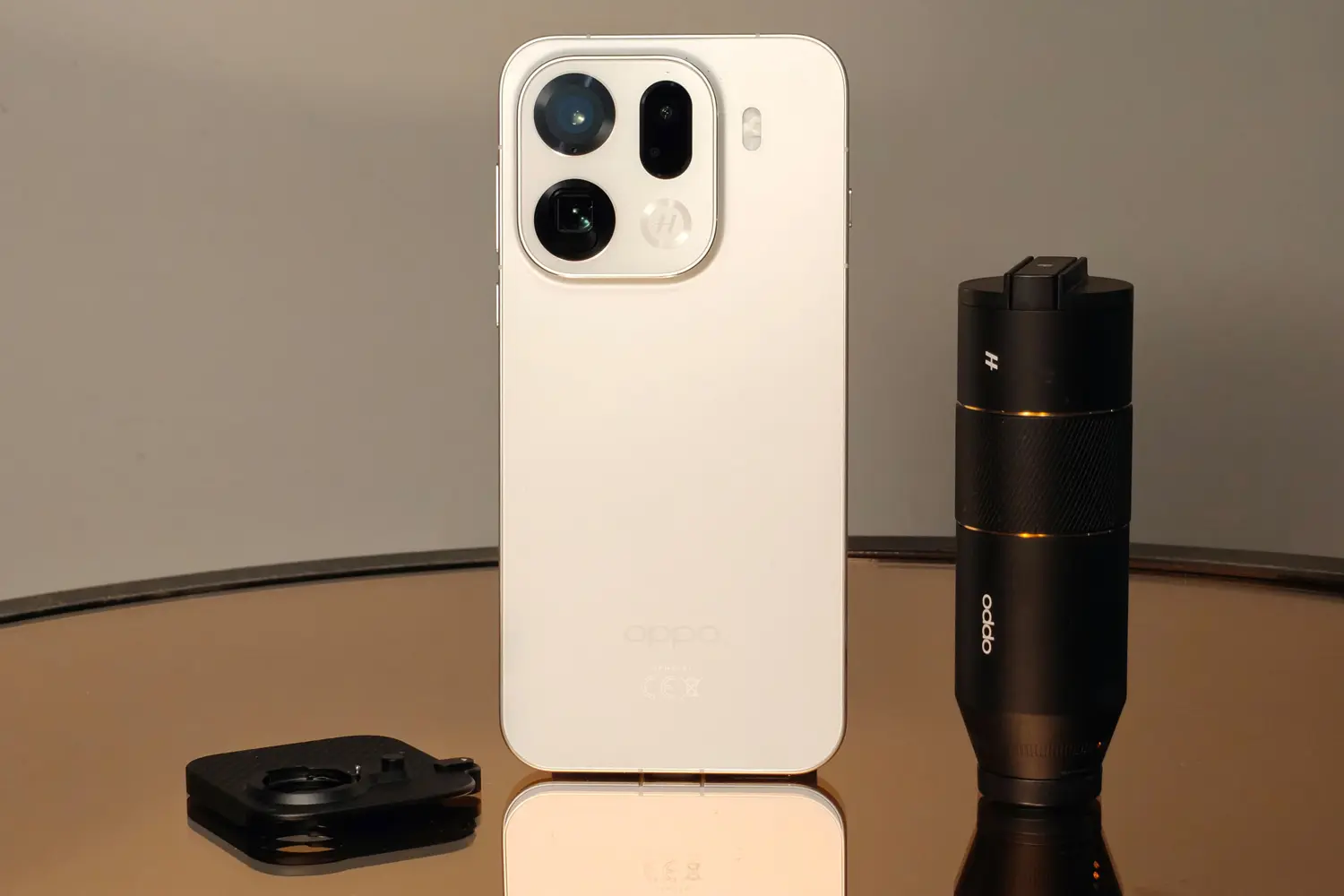
Oppo’s latest flagship, the Find X9 Pro, takes a slightly different route from most 2025 flagships — and it pays off. Instead of going with the expected Snapdragon 8 Gen 4, Oppo has chosen MediaTek’s new Dimensity 9500. It’s a bold move, and while the performance is good, it's not quite on par with the best from Qualcomm and Apple's A-series. However, it’s close enough that many users may not notice the difference. The only downside is some instances of throttling under heavy load.
The Find X9 Pro continues Oppo’s tradition of sleek, futuristic design. It’s slimmer, with thinner bezels and a refreshed rear camera module that feels more in line with the latest aesthetics. The curved back fits naturally in the hand, while the premium materials make it feel every bit like a flagship. The display is stunning — bright, crisp, and color-accurate — exactly what you’d expect at this level. Oppo continues to push boundaries in panel quality and visual smoothness.
Oppo’s innovation extends beyond design. The 7,500 mAh silicon–carbon battery is one of the largest in a mainstream flagship, delivering two full days of comfortable use. Despite the massive capacity, charging is impressively quick thanks to 80 W wired and 50 W wireless charging, topping up the battery in a surprisingly short time.
Cameras have always been Oppo’s pride, and the Find X9 Pro continues that tradition. Co-engineered with Hasselblad, the system now includes a spectral sensor for more accurate color tuning and true-to-life tones. The phone packs a 50 MP main wide sensor, a 50 MP ultra-wide sensor, and a 200 MP 3× telephoto lens. This year, Oppo dropped the 6× periscope telephoto found in the Find X8 Pro in favor of a new 3× telephoto with a larger sensor. The result? Sharper detail, faster focusing, and superior low-light performance. Oppo claims it delivers 6× “optical-quality” zoom, which holds up impressively well — though it still can’t truly replace a real optical 6× lens.
An intriguing addition is the teleconverter accessory, effectively an extra zoom lens for your phone. With it, you can reach up to 10× optical zoom, and even 40×–50× hybrid zoom looks surprisingly clear — better than what Apple offers at those ranges. It’s a photographer’s dream, though the camera software could use some polish to make the most of this accessory, especially when switching to using the accessory, as it can disable other lenses in the menu, impacting the overall experience.
Photos and videos from the Find X9 Pro look excellent — detailed, well-exposed, and color-balanced. Thanks to Hasselblad’s tuning, switching between lenses feels seamless, with consistent color grading across all three. Video performance is equally impressive, with stable footage and excellent dynamic range, even when zooming or changing lenses mid-recording.
Running ColorOS 16 based on Android 16, the Find X9 Pro offers a polished experience with a touch of familiarity — perhaps too much familiarity, as parts of it feel directly inspired by iOS. Still, Oppo adds its own flair with useful tweaks like a side menu for quick actions and a customizable Action Button that can trigger any shortcut you like. AI features play a big role too, including an advanced AI Photo Editor and a fun Animate feature that brings photos to life. Oppo promises 5 years of Android updates and 6 years of security patches, ensuring the phone stays relevant long after launch.
The Oppo Find X9 Pro is another strong showing from Oppo — refined, powerful, and full of character. The Dimensity 9500 holds its own against Snapdragon and Apple chips, despite some throttling issues, the camera system is genuinely impressive (even without the 6× lens), and the new silicon-carbon battery is a game-changer for endurance. If Oppo can fine-tune its camera software to better handle teleconverter accessory, this could easily be one of the best all-round Android flagships of 2025. It's a great choice for photography enthusiasts, but it could have been even better if they optimized the software further, particularly for gaming beyond 60 Hz.
Comments (0)
No comments yet. Be the first to share your thoughts!