Exynos 2600
The 2nm Revolution: How the Exynos 2600 is Changing the Galaxy Story
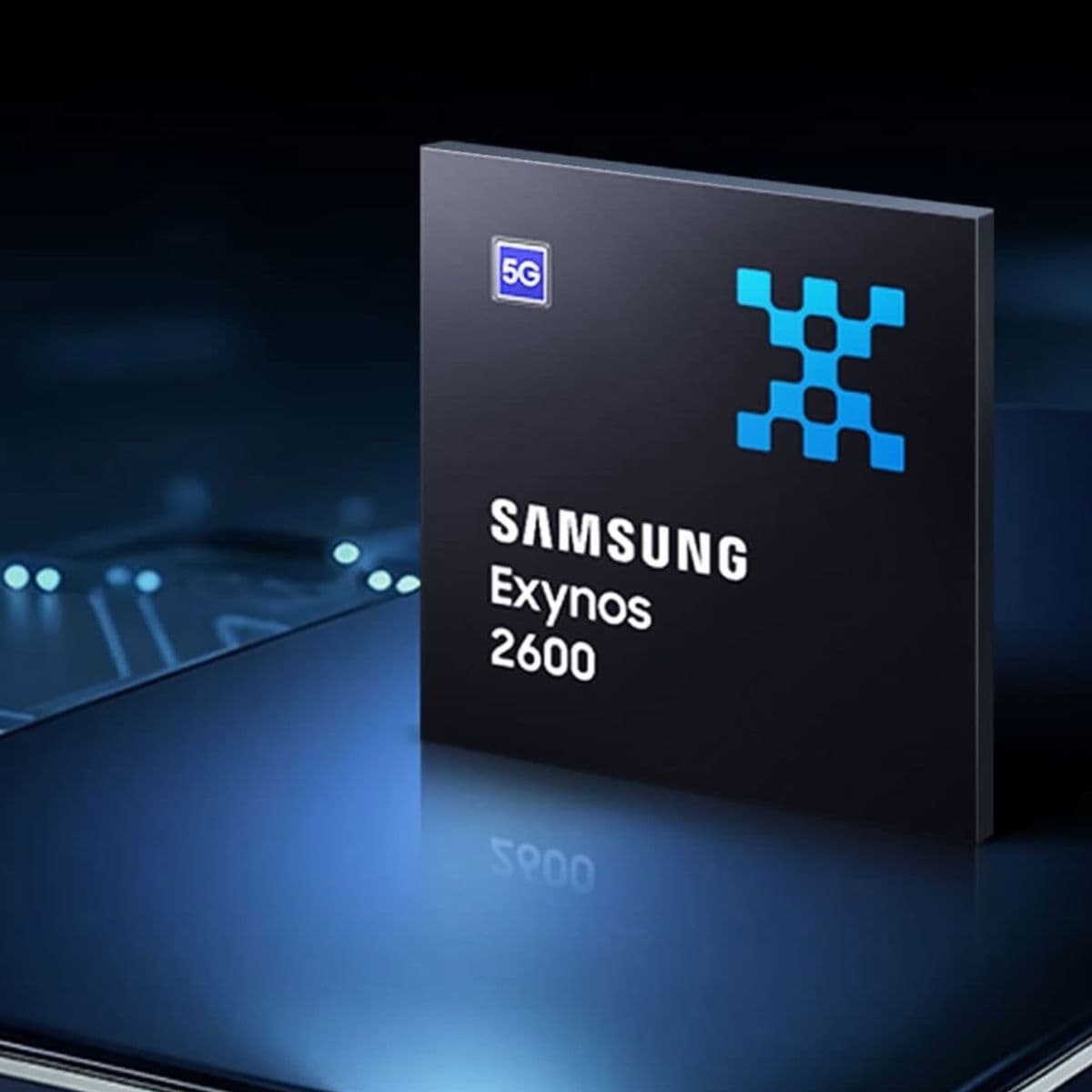
For nearly a decade, the "Exynos vs. Snapdragon" debate has been the defining drama of the Android world. If you lived in Europe or parts of Asia, buying a Samsung Galaxy often felt like a roll of the dice—you might end up with the "lesser" chip that ran hotter and throttled faster than its American counterpart. But with the arrival of the Exynos 2600, the narrative might just change. Announced as the world’s first mobile processor built on a 2nm (nanometer) process, the Exynos 2600 isn’t just an incremental update. It is Samsung’s "all-in" moment, designed to power the upcoming Galaxy S26 and S26+ and reclaim the performance crown.
To understand the Exynos 2600, you have to look at its foundation: the 2nm Gate-All-Around (GAA) architecture. By wrapping the "gate" around the transistor's channel on all four sides, Samsung has achieved precise control over electrical current, effectively solving the "leakage" that caused previous Exynos chips to overheat. For the user, this means the Exynos 2600 can do more work while using 25% less power than its predecessor. To combat the infamous "Exynos heat," Samsung introduced Heat Path Block (HPB) technology. By moving the RAM to the side of the chip rather than stacking it directly on top, a copper heat sink can sit directly on the processor die. This reduces thermal resistance by 16%, allowing the phone to stay cool even during a two-hour gaming marathon.
The Exynos 2600 adopts a bold Deca-core (10-core) configuration. Notably, Samsung has ditched traditional low-power "little" cores entirely, opting for a high-performance "all-big-core" cluster. The Powerhouse: A single "Prime" core (Arm C1-Ultra) clocked at 3.8GHz handles the most demanding tasks instantly. The Comparison: Leaked Geekbench 6 scores show a single-core score of 3,455 and a multi-core score of 11,621. This puts it on par with the Snapdragon 8 Elite (Gen 5) and reportedly 14% faster in multi-core tasks than the Apple A19 Pro. For the everyday consumer, this translates to a phone that feels "snappy" from day one and stays that way, whether you're editing 4K video or juggling fifty browser tabs.
The Xclipse 960 GPU, built on AMD’s latest architecture, brings console-level realism to your pocket. Ray Tracing: Hardware-accelerated ray tracing is now 50% faster, meaning light, shadows, and reflections in games look strikingly lifelike. ENSS (Exynos Neural Super Sampling): Similar to high-end PC tech, this uses AI to upscale resolution and generate frames. You get the smoothness of 120fps with the battery consumption of a much lower frame rate. AI is no longer a cloud-based gimmick. The Exynos 2600 features an NPU that is 113% faster than the previous generation, enabling complex "Galaxy AI" tasks to run entirely on the device. Real-time Privacy: Live translation and photo object removal happen locally, meaning your data stays on your phone and works without an internet connection. Security: It is the first mobile chip to feature Post-Quantum Cryptography (PQC), protecting your data against future high-level security threats.
The chip's Image Signal Processor (ISP) supports sensors up to 320MP and introduces a Visual Perception System (VPS). This AI system recognizes elements in a frame—like a person’s face or a sunset—and optimizes them separately in real-time. It even recognizes when a subject blinks to ensure you capture the perfect shot. For video, Deep Learning Video Noise Reduction cleans up grainy footage in low light, making night videos look professional.
The Exynos 2600 represents more than just a spec bump; it is a fundamental shift in Samsung's silicon strategy. By moving to 2nm GAA ahead of its rivals, Samsung has produced a chip that prioritizes sustained performance and thermal stability—the two areas where Exynos historically struggled. For the consumer eyeing the Galaxy S26 or S26+, the narrative is finally shifting. You are no longer settling for a "regional variant"; you are getting a processor that rivals Apple’s efficiency and Qualcomm’s raw power. While the Snapdragon 8 Elite may still power the "Ultra" model in some regions to maintain carrier partnerships, the Exynos 2600 ensures that the standard S26 models are no longer the "lesser" choice.
Comments (0)
No comments yet. Be the first to share your thoughts!